
Photo Credits: Jacob Mogey
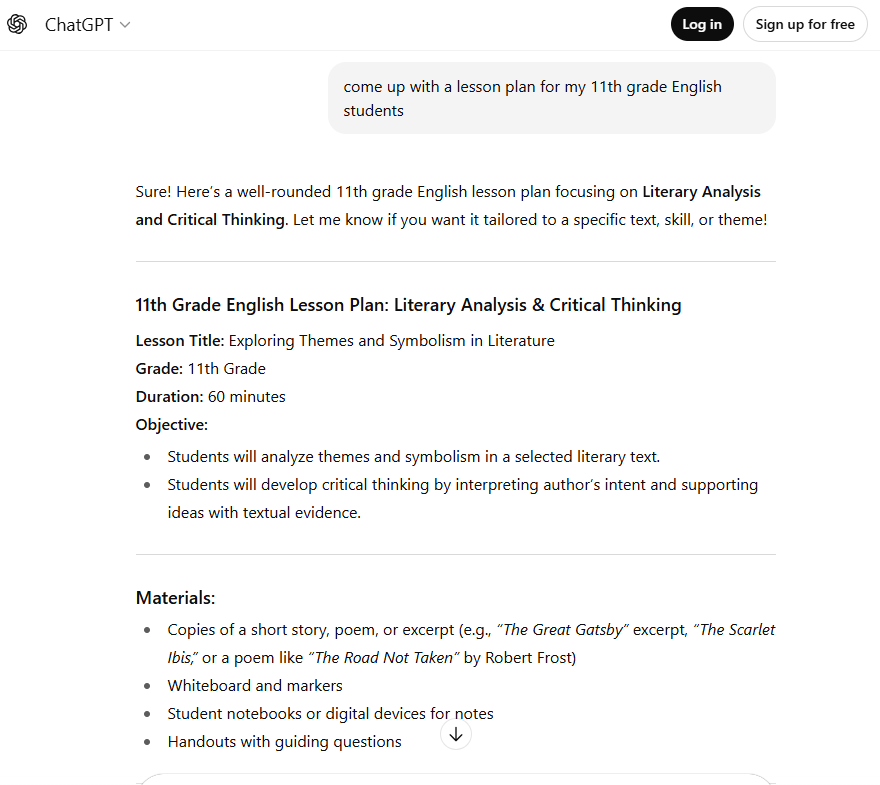
It is no secret that AI is being used by students everywhere to complete all manner of tasks and homework assignments. But students are no longer the only people in school using artificial intelligence to make their lives easier. Teachers have started experimenting with AI to create lesson plans, make quizzes and tests, and even grade work, all while claiming that AI shouldn’t be used by students at all. If teachers can use AI to save time, why can’t we?
This question brings us to the heart of the debate about AI in education. On one hand, teachers argue that when students use AI for assignments, it robs them of real learning. I agree that copying and pasting AI-generated answers is not the same as grappling with a difficult math problem or writing an essay from scratch. On the other hand, teachers are starting to rely more and more on AI themselves. According to an EdWeek survey, many teachers use AI to reduce their workload, which can take up nearly 30 hours a week outside of class time. Isn’t that the same kind of shortcut students are being criticized for?
The reality is that teachers do need the help. The endless grading and emails from parents and students alike weigh them down. If AI can handle some of that load, it frees teachers to connect with students and target concepts students are having the most trouble with. This creates a double standard when it comes to AI use.
Instead of completely restricting access to AI and admonishing any use of it in class, teachers should start integrating AI into their lesson plans more. Teaching students to use AI in a way that makes tasks more time-efficient while still keeping the learning aspect is essential.
AI will be in our future whether we like it or not. It’s better to learn how to use it to our advantage rather than ignore its influence. Employers in almost every field want people that either know how to make AI models or know how to use them. There are students who will abuse the opportunity to use AI, but I believe many more will come out with a different perspective on how AI can be used responsibly.
So should students be able to use AI? My answer is yes, but with limits. Restricting the ChatGPT tab on Chromebooks won’t do much, nor will any outright bans on AI. If teachers are allowed to use AI to save time, students should be allowed to use it to learn more effectively.
In the end, education is about balance. Both teachers and students should be able to benefit from new technology without criticism, but they also need to remember that no tool can replace critical thinking and creativity.

Tanishqa Kolekar is a junior at Washington High School and was born and brought up in Fremont. This is her first year at the Hatchet and she’s interested in writing about politics, as well as covering common school issues in a more humorous fashion. She enjoys reading, writing flash fiction and short stories, and developing video games in her spare time. In the future, Tanishqa hopes to be a cybersecurity professional or video game developer, although she’s painfully aware that aiming for a computer science degree could just leave her living in a nicely decorated tent.