
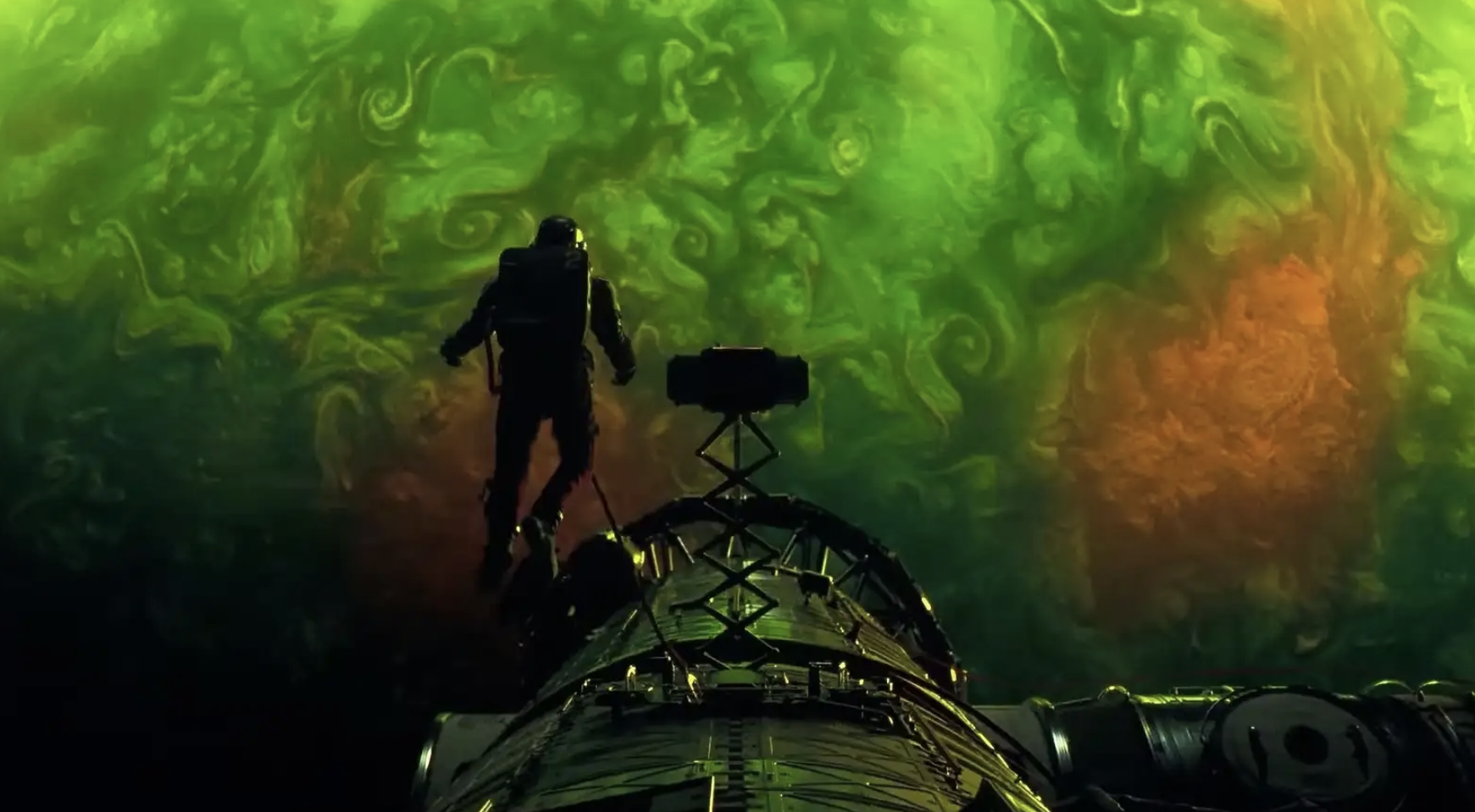
In many respects, 2026 has become the year of space. Project Hail Mary, which follows science teacher Ryland Grace on a desperate mission to save Earth from a dying sun, is one of the highest-grossing films of the year. The Artemis II mission, which launched on April 1 and returned on April 11, marked the first time humans had traveled beyond low Earth orbit since 1972. Together, the two stories—one fictional, one real—have sparked a renewed interest among students in space, science, and what humanity is reaching for.
Having read Andy Weir’s novel before seeing the film, WHS senior Arya Balan Balakrishnan came in with high expectations and specific opinions about what the adaptation got right and wrong. “The movie does a great job capturing the spirit of the book, though it does leave out some content that fans would miss,” Arya said. For him, the biggest trade-off was losing the internal monologue that makes the novel so compelling. “The book lets you live inside Grace’s head more, which I preferred, but Gosling made up for it with his performance,” he added. Despite the differences, he sees value in both and recommends experiencing them in order. “Read the book first, then watch the movie – you’ll appreciate both in different ways,” Arya said.
The science woven throughout the story was another point of discussion for Arya. He views the film’s commitment to real scientific concepts as one of its greatest strengths: “The science made it so much more engaging. It felt like the movie actually respected my intelligence,” he said. That quality, he argues, is what sets the film apart from other blockbusters.
Not everyone came into the film with the same background. WHS senior Suhaan Dhillon had never heard of the novel and attended the film mostly because his friends wanted to go. He admits his expectations were low. “I thought it would be way too nerdy for me,” he said. “It has its slow moments, but it picks up and stays interesting.” For Suhaan, Ryan Gosling’s humor was the unexpected highlight. “He was really charming and funny. Without that, the movie could have felt cold and technical,” he remarked.
Artemis II also drew different reactions from the two students. Arya had been following the mission closely and watched the launch live. For him, the historic significance was impossible to overlook. “People my age don’t really have a Moon moment yet—this feels like it could be ours,” he said. He was especially moved by the crew’s milestones. “It was long overdue, honestly. The fact that it took until 2026 to send a woman past low Earth orbit says a lot about how slow progress can be,” Arya added.
Suhaan followed highlights online but did not track the mission closely. Still, one detail stood out to him. “That part actually got to me,” he said of the crew’s historic firsts. “Representation in something as massive as space exploration really does matter.” When asked whether the cost and risk of missions like Artemis are justified, he acknowledged the complexity. “The money is hard to justify when we have problems right here on Earth. But then I think about where we’d be without NASA, and I come around,” Suhaan said.
Project Hail Mary and Artemis II, through blockbuster storytelling and real-world exploration, have given students a rare moment where fiction and reality feel like the same conversation. For students like Arya and Suhaan, the two stories are not just about rockets or movies—they are about what it means to reach for something beyond what we already know.